Blog

Southfield MI Corporate Video & Executive Interviews: Legal firm marketing.

Law Firm Video Marketing: Building Trust Before the First Call

Nobody hires a lawyer casually. Whether the matter is an injury, a divorce, a criminal charge, or a business dispute, clients arrive anxious, skeptical, and comparing firms in private before they ever call one. That research phase is where cases are won or lost — and it is exactly where law firm video marketing does its work. Video lets a potential client meet the attorney before the consultation: hear how they explain things, judge whether they seem trustworthy, and picture working with them. Firms that show up on camera convert more of their research traffic into consultations. This article covers the video types that work for law firms, and the production standards that make attorneys look credible rather than promotional. Why Video Works Differently for Law Firms Legal services are a trust purchase with high stakes and low transparency — clients cannot evaluate legal skill directly, so they evaluate signals: confidence, clarity, empathy, professionalism. Video transmits those signals faster than any other medium. A prospective client who has watched an attorney calmly explain what happens after a car accident already half-knows them; the consultation starts warmer, and the decision leans toward the familiar face. There is also a practical channel effect: attorney videos improve engagement on practice-area pages, feed the firm’s social presence, and give referral sources something concrete to pass along. The Attorney Profile Video The foundation of attorney video production is the profile: ninety seconds to two minutes in which a lawyer explains who they serve, how they work, and why they practice. The best profiles are not resumes read aloud — credentials belong on the bio page. They answer the question a worried person is actually asking: “Will this person take my problem seriously, and can I stand working with them for a year?” Warmth, plain language, and one genuine story beat any recitation of awards. Every attorney page on the site should carry one. Practice-Area Explainers: Answer the Questions Clients Search Every practice has the same twenty questions: What is my case worth? Do I have to go to court? How long will this take? What does it cost? Short explainer videos — one question, one clear answer, two minutes — turn those searches into introductions. They rank on search and video platforms because they match real query language, they demonstrate expertise without promising outcomes, and they filter calls: clients arrive better informed, which saves consultation time. A library of ten to twenty explainers, filmed in batches over one or two production days, is the highest-ROI project in legal video. Client Stories, Handled Ethically Testimonials are powerful in every industry and delicate in this one. Client-story videos must respect confidentiality and attorney-advertising rules, which vary by jurisdiction and can require disclaimers, consent documentation, and care about implying guaranteed results. The productions that work focus on the experience of being represented — communication, responsiveness, feeling defended — rather than dollar amounts. An experienced production partner builds the compliance step into the process: releases, review by the firm’s ethics counsel, and edits that keep the story human without crossing lines. Production Standards: Credibility Is the Deliverable Law is a poor fit for shaky, casual video. The visual bar is set by what clients associate with competence: clean, stable framing; flattering, soft light; a background with depth — chambers-style shelving, a conference room, a city view — and above all, excellent audio. Attorneys are professional speakers, but they are not performers; a good director gets natural delivery by interviewing rather than scripting, then edits answers into tight, confident statements. Filming in batches keeps cost sane: one production day at the firm can capture two profiles and eight explainers if it is planned properly. That planning discipline is what separates a professional crew from a videographer with a nice camera. Where the Videos Go to Work Production is half the strategy; placement is the other half. Profiles belong on attorney bio pages and in email signatures. Explainers belong on matching practice-area pages, the firm’s video channel, and social feeds as captioned clips. Intake teams should send relevant videos with consultation confirmations — a client who watches two videos before the meeting shows up committed. And every video should carry captions, because much of it will be watched silently on a phone in a waiting room. Distribution turns a video expense into a marketing system. Budgeting for Legal Video A single-day batch shoot producing an attorney profile plus a set of explainers typically runs in the mid four figures, with per-video cost dropping sharply as the batch grows. Larger firms budget annual capture days to keep libraries current as attorneys and practice areas evolve. Compared with what firms routinely spend on directories and pay-per-click — where video measurably lifts conversion on landing pages — a video library is one of the few legal marketing assets that appreciates. Budget context is available in our pricing guide. Video for Recruiting and Referrals Client acquisition is not the only return. Lateral hires and law-school recruits research firms exactly the way clients do, and a culture video — attorneys talking candidly about mentorship, caseloads, and how the firm actually works — differentiates in a market where every careers page says the same things. Referral relationships benefit too: a physician, accountant, or fellow attorney deciding where to send a client can forward a two-minute profile video far more easily than a brochure. The same attorney video production investment quietly serves three audiences at once. A 90-Day Rollout Plan A sensible first quarter of law firm video marketing looks like this. Month one: strategy and scripting — pick two attorneys and the ten highest-value client questions, then book a single batch production day. Month two: publish the profiles to bio pages, release one explainer per week to practice-area pages and social channels, and arm the intake team with links to send before consultations. Month three: read the data — watch time, page conversion, consultation quality — and script the second batch around what clients actually watched.
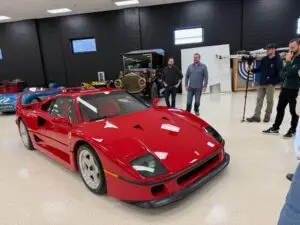
Professional film crew for hire in Troy, MI equipped with RED and Arri cinema gear for prestigious brand shoots.

Manufacturing Video Production: Show the Work That Wins the Contract

Manufacturers sell trust in capability. Before a buyer signs a supply agreement, they want to know your capacity is real, your quality process is disciplined, and your operation will still be running in five years. For decades the answer was the plant visit. Today, manufacturing video production does the first round of that job at scale: a strong facility video answers the capability question before the first sales call, works around the clock, and travels to procurement teams who will never book a flight to Michigan. This article covers where video earns its keep for industrial companies and how to produce it without disrupting the floor. A factory tour rarely stands alone. It usually sits inside a wider multimedia production effort that also produces photography, training modules and social edits from the same days on site. Why Industrial Buyers Respond to Video B2B buying committees do most of their research before contacting vendors, and industrial products are hard to evaluate from spec sheets alone. Video closes that gap in ways paper cannot. Footage of your CNC department running a full shift proves capacity claims. A slow pan across an inspection lab says more about quality culture than a certifications page. Real employees explaining real processes signal a stable, skilled workforce. None of this persuades like a testimonial gimmick — it persuades like evidence, which is precisely what engineers and buyers want. The Factory Tour Video: Your Hardest-Working Asset If an industrial company produces only one video, it should be a factory tour video. The format is simple: three to five minutes walking a viewer through the operation — receiving, production, quality, shipping — anchored by one or two credible voices, typically the operations leader and a line veteran. Done well, it becomes the universal sales asset: it opens capability presentations, anchors the website, plays at trade shows, supports audits and certifications, and gives distant prospects a genuine feel for the operation. We have watched a single well-made tour video shorten sales cycles simply because the first site visit stopped being the first impression. Beyond the Tour: Four More Videos That Pay for Themselves Process and capability videos go deep on one differentiator — a five-axis machining cell, a clean room, a custom fabrication process — and give sales teams a specific answer to “can you do this?” Recruiting videos show the floor, the people, and the career path; in a market where skilled-trades hiring is a constraint on growth, showing a modern, safe, organized plant is half the argument. Safety and training videos standardize onboarding across shifts and document procedures exactly as your best people perform them. And customer case videos pair your capability story with a named customer outcome, which is the strongest proof available in industrial marketing. Filming on a Working Floor Without Stopping It The legitimate worry about plant videography is disruption. The answer is production discipline. A good crew scouts first — walking the floor, mapping shots, power, and safe camera positions before anyone rolls. Filming is scheduled around production reality: busy lines when activity is the story, planned downtime for shots that need controlled access. Crews follow site PPE and safety rules without exception, work compact so aisles stay clear, and capture efficiently — a well-planned facility shoot typically needs one to two days, not a week. Confidentiality is handled up front: restricted areas, proprietary tooling, and customer parts get flagged in the scout, not discovered in review. Making Heavy Industry Look as Good as It Is Plants are visually rich — sparks, molten metal, robotics, coordinated people — but they rarely photograph well by accident. Lighting on the floor is engineered for work, not cameras, so crews bring key light to faces and let machines provide drama. Slow-motion turns routine operations — a press stroke, a weld, a pour — into imagery buyers remember. Detail shots of finished surfaces and tight tolerances communicate quality wordlessly. And aerial footage establishes the scale of a facility in seconds. The goal is not to disguise the plant; it is to show the operation the way a proud plant manager sees it. What Manufacturing Video Production Costs For planning purposes: a focused single-day shoot producing a factory tour video plus cutdowns typically lands in the mid four figures to low five figures, depending on crew size, locations, and finishing. Adding a second day often doubles the usable library — recruiting, training, and process footage — for far less than double the cost, because scouting, travel, and setup are already paid for. That library approach is why we encourage manufacturers to plan video as an annual capture, not a one-off project. Broader budget context is in our Michigan video production pricing guide. Getting Internal Buy-In Plant leadership cooperation makes or breaks these projects, so frame the video as an operations asset, not a marketing intrusion: recruiting help, training material, and customer-visit preparation all live in the same footage. Involve the plant manager in the shot plan, schedule around production, and feature the team’s best people — most floors light up once employees see the crew treating their work as worth filming. Distribution: Where Industrial Video Works Hardest Industrial buyers rarely browse social feeds for suppliers, so distribution looks different from consumer marketing. The factory tour video belongs on the website homepage and capabilities page, embedded in proposal documents, cued up at trade-show booths, and attached to RFQ responses where it answers capacity questions before they are asked. Sales engineers should carry process videos on tablets for customer visits. Recruiting videos belong on job postings and community-college partnerships. And every video should live in a shared internal library, because footage of your operation has a way of being needed — by sales, HR, auditors, and executives — long after the original project ships. A Realistic Production Timeline From kickoff to delivered video, most manufacturing video production projects run four to eight weeks. Week one is discovery and scripting against your sales goals; week two is the site scout and

Choosing the right production partner

Video Podcast Production: How to Look and Sound Professional

Podcasting stopped being an audio-only medium years ago. The shows that grow fastest today are watched as much as they are heard — full episodes on YouTube, clips on LinkedIn, Reels, TikTok, and Shorts. That shift has made video podcast production one of the most requested services for businesses building an audience. The good news: a professional-looking show is achievable on a sensible budget. The catch: video raises the bar. Audio listeners forgive a lot; viewers do not. This article walks through what a professional podcast actually requires, from the recording setup to the publishing workflow. A podcast is one output among several. Treated as multimedia production, a single recording day also yields short clips, an audio feed, transcripts and promotional graphics. Why Businesses Are Investing in Video Podcasts A podcast is the most efficient content engine most companies will ever run. One hour of recorded conversation becomes a full episode, an audio feed, a blog post, an email, and ten to twenty short clips for social. It positions your people as authorities, gives sales teams substantive content to share, and builds the kind of trust that display ads cannot buy. Video multiplies all of it: faces build connection faster than voices, YouTube functions as the world’s second-largest search engine, and short vertical clips are the highest-reach format on nearly every platform. The Podcast Video Recording Setup That Actually Matters Gear lists overwhelm people, so here is the honest hierarchy for any podcast video recording setup. Audio comes first — viewers tolerate an average image but abandon bad sound in seconds. Each speaker needs their own quality microphone, positioned close, recorded to separate tracks. Lighting comes second: soft, flattering key light on each face does more for perceived quality than any camera upgrade. Cameras come third: two or three matched cameras — a wide shot plus a close-up per host — turn a static conversation into something watchable. Last is the room itself, which is really an audio and art-direction decision: soft surfaces to tame echo, and a background with depth that says something about your brand. The most common mistake we see is inverted priorities — a beautiful camera pointed at a poorly lit person in an echoing room, wearing no microphone. Studio, Office, or On Location? There are three workable models. A dedicated studio gives you consistency and speed: everything stays rigged, so recording day is just recording. A converted office or conference room works well once it is treated for sound and lit properly — and it keeps the brand’s real environment on screen. On-location recording, where a crew brings the studio to a guest, produces the most premium feel and is often the only way to land senior guests. Many of the shows we support use a hybrid: a home base setup for regular episodes, with a mobile crew for flagship interviews. Multi-Camera Coverage Without the Mess Professional shows are edited between angles: the wide establishes the room, close-ups carry the conversation, and cuts follow the speaker naturally. That requires synchronized cameras, matched color, and either a live-switched recording or a post-production edit. Live switching keeps turnaround fast and costs down; a full edit gives maximum polish and painless removal of tangents. The right answer depends on your publishing cadence — weekly shows usually need the speed of switching, while monthly flagship episodes justify the full edit. The Workflow After the Record Button Recording is half the job. A sustainable show needs a repeatable pipeline: audio cleanup and leveling, color-matched multi-cam editing, graphics — titles, lower thirds, episode art — captioning, and then versioning. From each episode, plan on a full-length YouTube master, an audio-only feed version, and a batch of vertical clips built around the strongest moments. Captions are not optional; the majority of social video is watched with sound off. This packaging stage is where most self-produced shows quietly die, because it consumes more hours than the recording itself. It is also the stage where a production partner adds the most leverage. What Video Podcast Production Costs Costs scale with ambition. A self-operated single-camera setup can be assembled for a few thousand dollars in equipment. A professionally produced multi-camera episode — crew, direction, edit, and clip package — typically runs from the low four figures per episode, with discounts for batching multiple episodes in one session, which is how most of our clients work. Batching two or three episodes per production day is the single best cost lever in podcasting. Our pricing guide gives broader context for production day rates. Mistakes That Sink New Shows Four patterns account for most failed podcasts. Launching without a format — undefined length, structure, or audience — so every episode is a reinvention. Over-investing in gear and under-investing in the edit. Publishing inconsistently, which kills algorithmic momentum on every platform. And treating clips as an afterthought, when for most business shows the clips reach ten times more people than full episodes. A production plan solves all four before the first recording. Choosing Length, Format, and Cadence Format decisions beat gear decisions. Interview shows are the easiest to sustain because guests supply the material; panel formats add energy but multiply scheduling pain; solo commentary is the hardest to do well on camera. Length should follow the conversation’s natural value — most business shows land between twenty and forty-five minutes, long enough for substance, short enough to edit and watch. Cadence is the discipline that matters most: a fortnightly show published reliably outperforms a weekly show that skips months. Pick the cadence you can defend on your busiest quarter, then batch recordings to stay ahead of it. Make the Guest Experience Effortless For business podcasts, guests are also prospects, partners, and referral sources — the recording experience is part of your brand. Professional video podcast production makes guests look and sound better than they expected: proper lighting, a flattering frame, an edit that removes their stumbles. Send prep notes and questions ahead, keep the session to a tight hour,

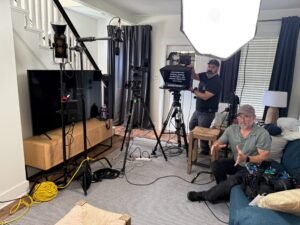
Interview video production setup at Saint John's Resort, Michigan

Drone Videography in Michigan: What It Adds and When to Use It

Few tools have changed video production as quickly as the camera drone. A decade ago, an aerial shot meant renting a helicopter; today, drone videography in Michigan puts sweeping cinematic footage within reach of almost any business. But drones are not magic dust to sprinkle on a project. Used well, they add scale, context, and production value that ground cameras cannot match. Used badly, they add cost and empty spectacle. This article explains what drone footage genuinely adds, when aerial video production makes sense for a Michigan business, and how to plan for it properly. Aerial footage rarely ships on its own. It usually feeds a wider multimedia content production effort spanning brand film, social edits and website content. Aerial work usually runs alongside a ground team. You can hire a professional camera crew for the same shoot days. What Drone Footage Actually Adds to a Video The value of an aerial shot is context. A ground-level camera shows a building; a drone shows the building in its neighborhood, its campus, its skyline. For a manufacturer, one orbit above the facility communicates scale faster than a paragraph of narration. For a real estate developer, a slow aerial reveal turns a property into a story. For an event, a rising shot over a full venue captures energy no tripod can. Aerials also solve practical problems. They replace expensive jib and crane setups for high-angle shots, and they give editors breathing-room footage — transitions, establishing shots, and b-roll that make an edit feel expensive. In our experience producing video projects across Detroit and the rest of the state, a single well-planned drone session often supplies usable footage for a brand film, a website header loop, and months of social content. Where Michigan Businesses Use Aerial Video Most Demand for aerial video production in Detroit and across Michigan clusters around a few use cases. Manufacturers and logistics companies use flyovers to show facilities, yards, and production scale. Construction firms document progress month by month from identical flight paths, creating time-lapse sequences clients love. Golf courses, marinas, resorts, and downtown districts use aerials for tourism marketing, because water, fairways, and skylines simply look better from above. Real estate and commercial property teams use drones for listings and leasing videos. And event producers use them for festival, race, and campus coverage where the size of the crowd is the message. The Rules: Licensing, Airspace, and Insurance Commercial drone work is regulated, and this is where hiring a professional matters. Any drone flown for business purposes in the United States requires a pilot holding an FAA Part 107 Remote Pilot certificate. Much of metro Detroit sits inside controlled airspace around DTW, Willow Run, and smaller airports, which means flights frequently need airspace authorization before takeoff. Flying over people, over moving vehicles, or at night carries additional restrictions. A legitimate production partner handles all of this — certification, airspace clearance, flight logs, and liability insurance that specifically covers drone operations. If a videographer cannot show you a Part 107 certificate and proof of insurance, the low quote is not a bargain; it is a liability sitting on your project. What Separates Professional Aerial Footage from Hobby Footage Almost anyone can buy a capable drone. The difference shows up in three places. First, flight craft: professional pilots fly smooth, repeatable moves — orbits, reveals, push-ins — at consistent speeds that cut cleanly into an edit, instead of drifting and correcting. Second, camera craft: exposure, color profile, and shutter settings must match the ground cameras, or the aerials will look pasted in from another project. Third, story craft: a professional plans each aerial with a purpose in the edit, rather than collecting random flyovers and hoping something fits. That last point is the quiet killer of DIY drone projects. Footage that impresses on a phone screen often has no place in the finished video, because it was never planned against a script or shot list. Weather, Seasons, and Planning a Michigan Flight Window Michigan weather is a real production variable. Drones do not fly in rain, and most cannot fly safely in winds above roughly 20 miles per hour — common near the lakes. Cold matters too: battery performance drops sharply below freezing, cutting flight times. The practical answer is planning. We schedule aerial days with a weather window and a backup date, shoot early morning or golden hour when wind is calmest and light is best, and stack ground coverage on the same day so a weather delay never wastes a crew call. Seasons are also an opportunity. The same facility reads completely differently against summer green, October color, and fresh snow — and a brand film that uses two seasons of aerials feels bigger than its budget. How Drone Work Fits into a Full Production Aerials work best as one ingredient in a planned production, not as the whole meal. A typical corporate project might use six to ten aerial shots total: an opening establisher, a mid-film transition or two, and a closing pull-away. The rest is ground coverage — interviews, detail shots, people at work. That is why hiring a full video crew that includes drone capability usually beats hiring a standalone drone operator: one team, one visual style, one plan, and footage that matches. What Drone Videography Costs in Michigan As a rough planning figure, adding a licensed drone operator to an existing production day typically runs a few hundred to around a thousand dollars, depending on aircraft class and airspace complexity. A standalone aerial session — pilot, visual observer where required, authorization, and edited deliverables — commonly lands in the low four figures. Specialty work such as FPV fly-through shots, which thread through buildings and interiors in one continuous move, prices higher because it demands specialized aircraft and pilots. For context on how aerials fit into complete project budgets, see our Michigan video production pricing guide. Getting the Most from an Aerial Session Three habits maximize the return on a drone day. Brief