Multimedia production is the process of combining video, audio, animation, graphics, text, and interactivity into a single, cohesive piece of content. It plans every asset together rather than producing video alone, so one project can deliver a brand film, motion graphics, social clips, and interactive media that all support the same message.
In today’s digital age, audiences expect more than just text and images—they seek engaging, interactive content. This is where multimedia production comes in. But what exactly is it, and how can it benefit your brand? In simple terms, it’s the process of combining video, audio, animation, graphics, and interactivity into one seamless experience.
This article will guide you through everything you need to know about what is multimedia production: its definition, key components, workflows, best practices, and how to choose the right production partner.
1. What Is Multimedia Production? Definition and Scope
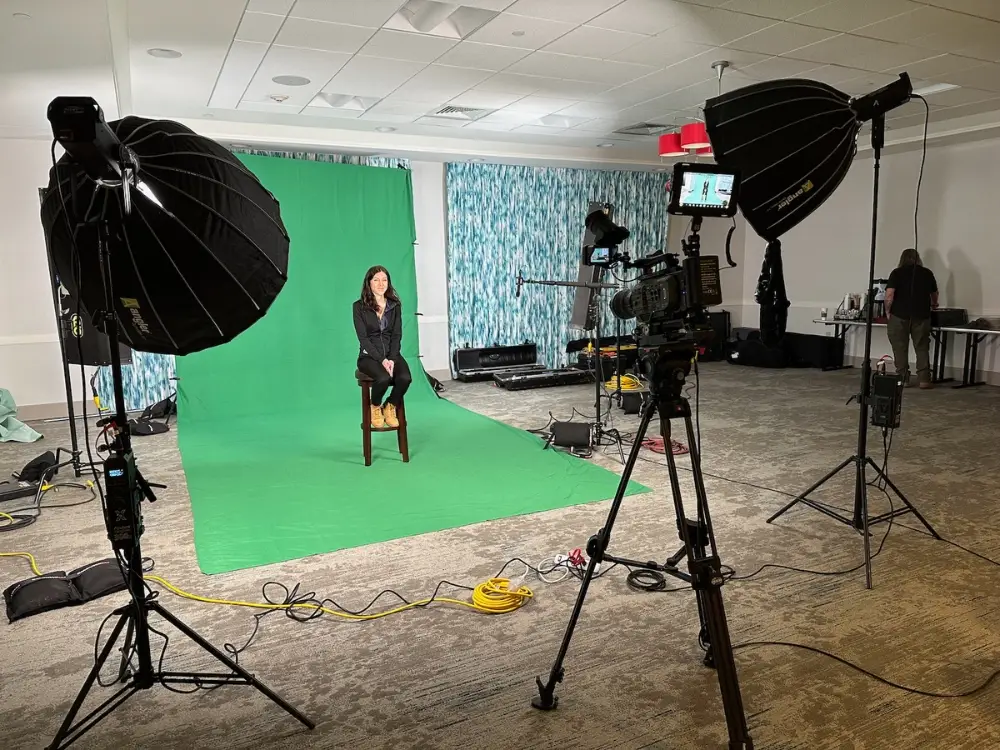
Multimedia production combines various media types—such as video, audio, animation, graphics, text, and interactivity—to create engaging, cohesive content. It goes beyond traditional video by blending these elements to tell more dynamic stories and deliver a richer, interactive experience.
When you ask, “What is multimedia production?” you’re asking how different media come together to communicate a message effectively. Whether it’s an animated explainer, an interactive training module, or a mixed-media branding campaign, multimedia production combines creativity, technical skill, and storytelling for maximum impact.
You will also see this written as multi media production, or described as multimedia content production. Both are common variations and refer to the same discipline described here.
2. Core Components of Multimedia Content Production
A strong multimedia content production project involves several key components working together. These include:
- Video / Motion: Live-action footage or motion graphics bring stories to life and capture attention.
- Audio / Sound Design: Voiceovers, music, ambient sounds, and effects create an immersive experience that engages the audience.
- Animation & Graphics: Whether it’s infographics or 2D/3D animations, these visuals help clarify complex ideas.
- Text / Typography: On-screen text, captions, and animated typography emphasize key points and messages.
- Interactivity & UI/UX: Interactive features like buttons, menus, and branching paths help users explore web or app-based content.
- Transitions & Effects: Smooth transitions and visual effects tie all elements together seamlessly.
When all these elements work in harmony, the result is far more engaging than static content. This synergy enhances user interaction and ensures your message is memorable.
3. Types of Multimedia Production
Multimedia production covers several distinct formats, and most projects combine two or more of them:
- Corporate and brand video — brand films, culture pieces and executive messages that carry a company’s story.
- Commercial and advertising content — broadcast spots, pre-roll and paid social creative built to sell.
- Event and live production — conference capture, multi-camera coverage and live streaming.
- Training and e-learning — instructional video, screen capture and interactive learning modules.
- Animation and motion graphics — explainer animation, data visualization and title design.
- Interactive and web media — embedded video, microsites and interactive product demos.
- Photography and still assets — stills captured alongside video for web, print and social use.
4. Multimedia Production Examples
The clearest way to understand the discipline is to see what it produces. These are typical projects and the mix of assets each one delivers:
- Brand film with a social cutdown set — a three-minute company story, plus fifteen-second vertical edits, motion-graphic titles and a stills library from the same shoot.
- Product launch campaign — a hero commercial, animated feature explainers, photography for the web store and looping video for trade-show screens.
- Conference and event package — multi-camera session recordings, a highlight reel, live-streamed keynotes and speaker interview clips.
- Employee training program — filmed demonstrations, screen-capture walkthroughs, animated safety sequences and interactive knowledge checks.
- Recruitment and culture story — employee interviews, facility b-roll, captioned social edits and photography for careers pages.
Each of these starts as one production and ends as a library of assets. You can see finished work of this kind in our video production portfolio.
5. The Multimedia Production Process, Step by Step
The multimedia production process runs through seven stages from first brief to final delivery:
- Discovery and concepting: define goals, audience, and the core message, and agree on tone and style.
- Scripting and storyboarding: turn the idea into a script, then storyboard the timing, pacing, and transitions.
- Pre-production planning: lock crew, locations, schedule, gear, software, and approvals; prepare asset lists for animation, graphics, and audio.
- Production and creation: film the footage, record audio, and build the graphics and animation.
- Post-production and integration: edit, color grade, mix the audio, add effects and interactivity, and assemble every asset into one piece.
- Quality assurance and testing: review for glitches, sync, responsiveness, playback, and brand consistency.
- Delivery and distribution: export in the right formats for each channel and publish.
6. How Much Does Multimedia Production Cost?
Multimedia production costs depend on scope, length, crew size, animation complexity, and the number of formats involved. A single short promo sits at the low end, while a multi-format campaign with original animation and music sits at the high end. For current rates, see our Michigan video production pricing guide.
| Project type | Typical range (USD) | Main cost drivers |
|---|---|---|
| Short social or promo video | From $1,600 per shoot day (Basic One Camera package) | Length, crew, editing time |
| Corporate or brand video | From $2,400 per shoot day (Basic ENG Interview package) | Shoot days, talent, scripting |
| Animation or motion graphics | Contact for a quote | 2D vs 3D, complexity, revisions |
| Full multimedia campaign | Contact for a quote | Multiple assets and formats |
| Interactive or web media | Contact for a quote | Development hours, integrations |
7. Tools and Software Used in Multimedia Production
Professional multimedia production relies on a stack of specialized tools, though the team’s ability to combine formats cleanly matters more than any single program.
- Video editing: Adobe Premiere Pro, DaVinci Resolve, Final Cut Pro
- Animation and motion graphics: After Effects, Cinema 4D, Blender
- Audio and sound design: Pro Tools, Adobe Audition
- Graphic design: Photoshop, Illustrator
- Interactive and web media: HTML5, specialized authoring tools, and web development frameworks
8. Best Practices & Tips for Effective Multimedia
To make your multimedia production successful, follow these best practices:
- Design with the audience in mind: Focus on user behavior and preferences, not just what looks visually appealing.
- Maintain consistency: Use a consistent visual style, color palette, and brand voice across all media formats.
- Optimize performance: Compress files without losing quality, test for fast load times, and ensure smooth playback across devices.
- Use layered assets: Keep original project files, layers, and source assets to easily update or edit your content in the future.
- Plan for modularity: Break your content into reusable segments so you can repurpose them for different projects or updates.
By following these practices, you can create multimedia content that is both effective and adaptable for long-term success. Learn more about The Impact of Audiovisual Production.
9. Common Pitfalls to Avoid
When people ask what multimedia production is, they often overlook common pitfalls that can derail projects. Be mindful of these mistakes:
- Overambitious scope: Trying to include too many media types without the necessary resources can overcomplicate the project and delay delivery.
- Poor integration: Treating each media element separately can result in jarring transitions or a lack of harmony in the final product.
- Neglecting performance: Large file sizes, slow load times, or compatibility issues frustrate users and lead to poor engagement.
- Weak script or messaging: Even if your visuals are top-notch, an unclear or weak message will undermine the impact.
- Ignoring revision flexibility: Locking in assets without the ability to make changes later can make future updates expensive or impossible.
- Underestimating testing: Skipping quality assurance or user testing often results in bugs, synchronization issues, or broken interactivity.
Avoiding these common pitfalls ensures a smooth production process and a final product that engages and performs effectively.
10. Multimedia Video Production: Where Video Fits In
Video is usually the backbone of any multimedia project. Multimedia video production combines filmed footage with motion graphics, audio design, photography, and interactive elements to create content that works across websites, social media, events, and broadcast. Where a standalone video tells one story in one format, multimedia video production plans every asset together — so a single shoot can produce a brand film, social cutdowns, event loops, and web content at once.
A typical multimedia video production package includes concept development, scripting, filming with a professional video crew, motion graphics, sound mixing, and versioning for each channel. For companies planning this kind of work, our business video production services cover the same scope from concept through delivery. You can see examples of this multi-format approach in our portfolio, or learn more about our full range of Michigan video production services.
The Full Meaning and Origin of Video
The word “video” comes from the Latin videre, meaning “to see.” In its full meaning, video is the technology of capturing, recording, processing, storing, and reconstructing a sequence of moving images to represent motion visually, typically paired with synchronized audio. Since its development in the mid-20th century, video has evolved from analog broadcast signals to the digital, high-definition formats used in modern multimedia production today — from cinema cameras and streaming platforms to the social and web video seen across every channel.
11. Choosing a Multimedia Production Partner
To bring your vision to life, collaborating with an experienced multimedia partner can make a huge impact. Here’s what to look for in a trusted partner:
- Portfolio diversity: a range of work across video, animation, interactive media, and live events.
- Technical expertise: the right tools, such as animation software, professional cameras, and audio equipment.
- Cross-disciplinary team: storytellers, animators, sound designers, and editors under one roof.
- Clear process and communication: milestone plans, feedback loops, and regular updates.
- Client experience and reputation: testimonials, reviews, and a solid track record.
12. Conclusion
Understanding what multimedia production is allows businesses to create content that connects and performs across platforms. By combining video, audio, animation, and interactivity, multimedia production enhances storytelling beyond static formats. Success depends on a structured process, collaboration, testing, and choosing the right partner.
For experts in video, animation, live event production, and branded content, consider Mongoose Films. Their full-service approach ensures your project meets high standards and engages your audience effectively.
Multimedia Production FAQs
What is multimedia production?
Multimedia production is the process of combining video, audio, animation, graphics, text, and interactivity into one cohesive piece of content. It blends these formats instead of using video alone, so a single project communicates one message across web, social, events, and broadcast.
What is the multimedia production process?
The multimedia production process moves through discovery, scripting and storyboarding, pre-production planning, production, post-production and integration, quality assurance, and delivery — each stage detailed in the workflow above.
What is the difference between multimedia production and video production?
Video production creates a single video deliverable. Multimedia production combines video with graphics, audio, photography, animation, and interactive media, planned together so every asset supports the same campaign.
What does multimedia production mean in practice?
In practice, multimedia production means one coordinated team producing all the content formats a project needs — for example, a brand film, social clips, event visuals, and a photo library from a single production effort.
How much does multimedia video production cost?
Costs depend on scope, crew size, and deliverables. See our Michigan video production pricing guide for typical ranges, or contact us for a quote.
Is multi media production the same as multimedia production?
Yes. “Multi media production” and “multimedia production” describe exactly the same thing — the two-word spelling is simply a common variation. Both refer to combining video, audio, animation, graphics and interactive elements into one coordinated project.
What are the components of multimedia production?
The core components are video or motion, audio and sound design, animation and graphics, text and typography, interactivity, and transitions and effects. A strong project blends several of these so they reinforce one message.
What tools are used in multimedia production?
Common tools include Adobe Premiere Pro and DaVinci Resolve for editing, After Effects and Blender for animation, Pro Tools for audio, and Photoshop and Illustrator for design. The right stack depends on the project’s formats.
How long does multimedia production take?
Timelines depend on scope. A short social video can take one to two weeks, while a full multi-format campaign with custom animation can take several weeks to a few months from brief to delivery.